
You can't trust anyone, not even yourself!
All is not how it appears in the world of KRED, the game of honesty, deception, cooperation and self-serving skullduggery for 3 to 5 wily, cunning, and unscrupulous players. The motto being, As long as you don't get caught, anything goes! Turn a blind eye to an opponent's lies in one move, expose their corrupt Machiavellian ways the next.
But remember, this is no place for law-abiding citizens: if you reckon you can win without bluffing, bribing, or downright lying your way to the top, you've got another think coming. You can't trust anyone, not even yourself!
In a series of Campaigns, players compete against each other to be the first to install a Pawn in their Office, put Heels in their Rostrums, and fill their Seats. There may be rules, but you will be aiming to flout them whenever it may give you an advantage. And despite what some might say, you're only in it for yourself.
The one who finally succeeds will have done the best job of deceiving and manipulating the others while ensuring, when the time is right to do so, that their opponent's deceits are ruthlessly exposed.
Glossaryarrow_upward
A Mark

Twelve used for a 3-player game, 15 for 4 players, 18 for 5 players.

Nine used for a 3-player game, 13 for 4 players, 17 for 5 players.

A Pawn
One per player.
- Pieces - The collective term for Marks, Heels, and Pawns.
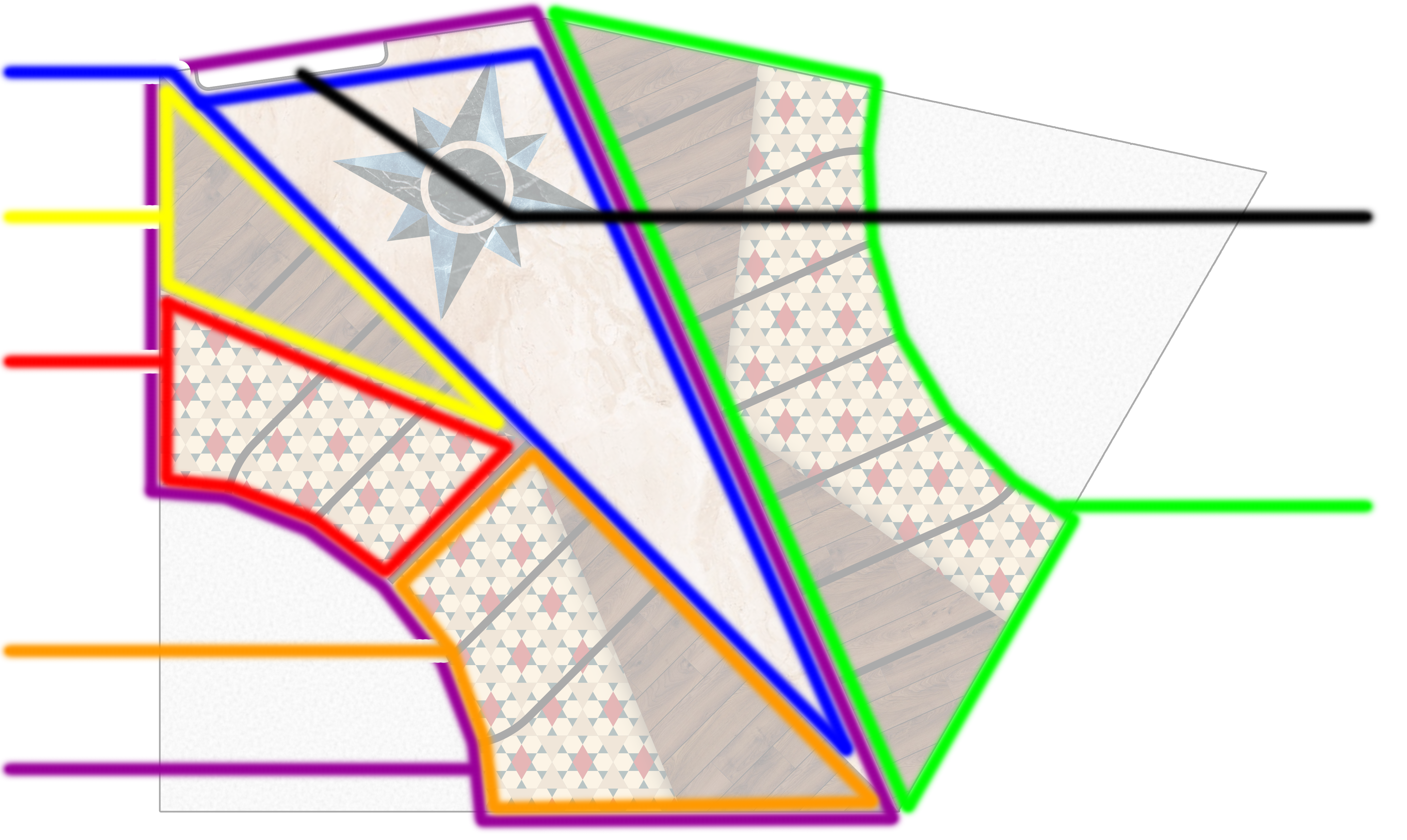
- A Domain - Each player area incorporating 1 Office, 2 Rostrums, 6 Seats, and 2 Factions.
- The Office - The large space with a blue star, where the Pawn is aiming to sit.
- A Rostrum - One of the 2 brown, triangular spaces below the Office.
- A Seat - There are 6 of these below the 2 podiums and adjacent to the Community.
- A Faction - This consists of a Stage and its 3 connecting seats.
- The Community - The Marks, Heels, and Pawns in the center of the board from which players will draw and return pieces throughout the game.
- The Accept Line - The area in front of each player where accepted Tiles await Challenges.
- The Bank - The area in front of each player where played Tiles are placed.
- A Campaign - The phase of the game where tiles are played and pieces are moved.
- Bureaucracy - The phase of the game where player's use funding to take various actions.
- An Honest move - Moving the pieces in accordance with what is indicated on the tile played.
- A Dishonest Move - Moving the pieces in accordance with what is indicated on one of the existing game tiles, but not the tile that was actually played.
- Illegal - A play that is not indicated on any existing game tile (ignoring the blank tile).
- Credibility Token - Notched triangular pieces used to keep track of each player's credibility.
- A Tile - The rectangular pieces used that display various moves and funding.
- Funding - The value on each tile that can be used throughout the game.
A Faction
Objectivearrow_upward
The objective is to be the first player to have a Pawn in the Office, a Heel in each Rostrum and either a Mark or a Heel in all 6 Seats. Pieces are moved into position by playing tiles in the Campaign phase, or by using funding during the Bureaucracy phase. A winning set-up will not be achieved by making only Honest moves, so be prepared to do whatever you must to defeat your opponents!
Game Setuparrow_upward
At the beginning of the game, a Mark is placed in every other Seat (starting from the left). All remaining pieces are placed in the Community.
The Tiles are shuffled face-down and dealt evenly among players: 8 in a 3-player game, 6 in a 4-player game and 5 in a 5-player game (The blank tile is used only in a 5-player game).
Players look at their Tiles, select one to keep and pass the rest to the player on their left. Repeat this step until all tiles have been claimed. This process is done only once, at the beginning of the game. It is not repeated at the beginning of any subsequent Campaigns.
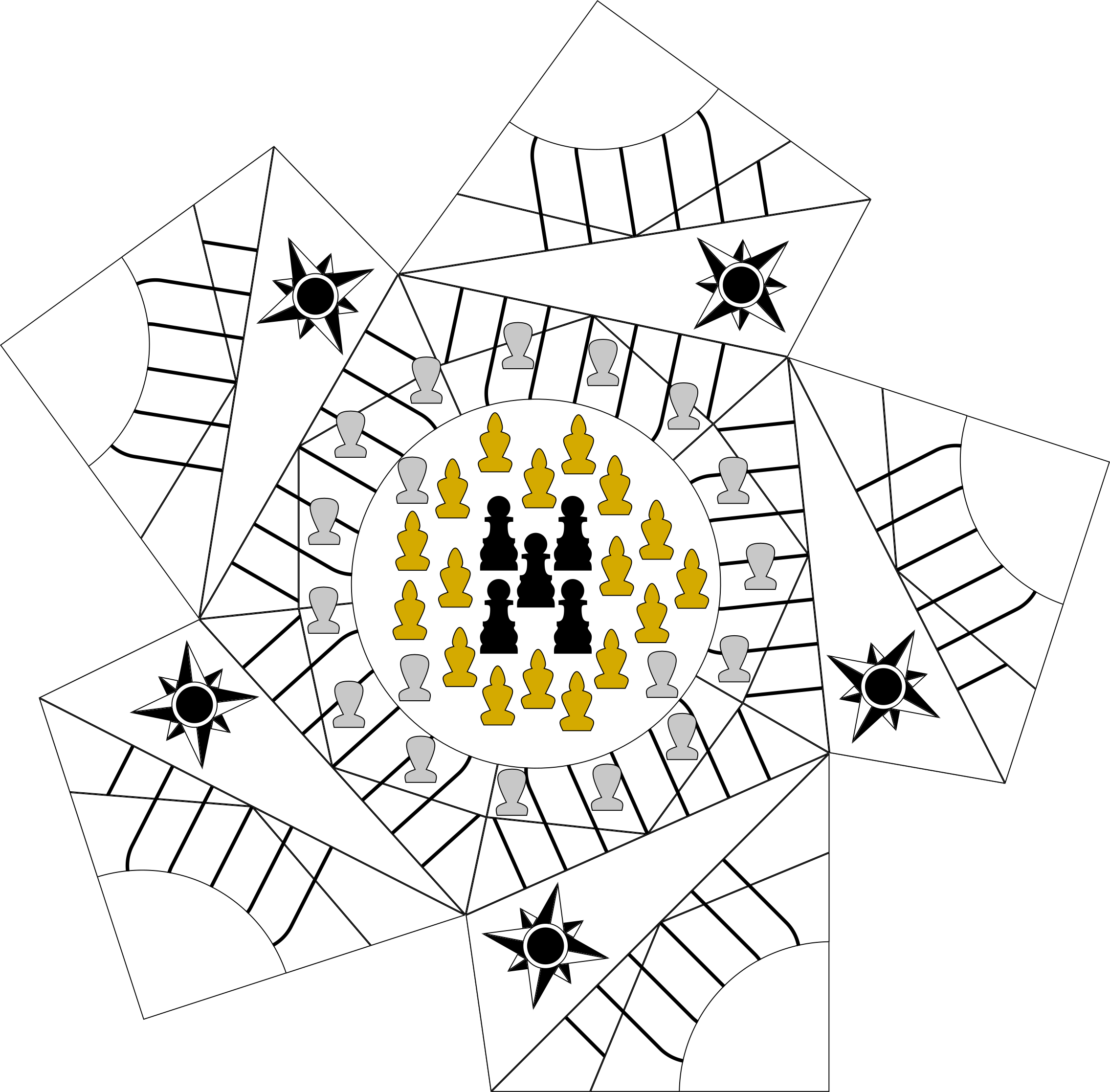
5-Player Setup
18 Marks, 17 Heels, 5 Pawns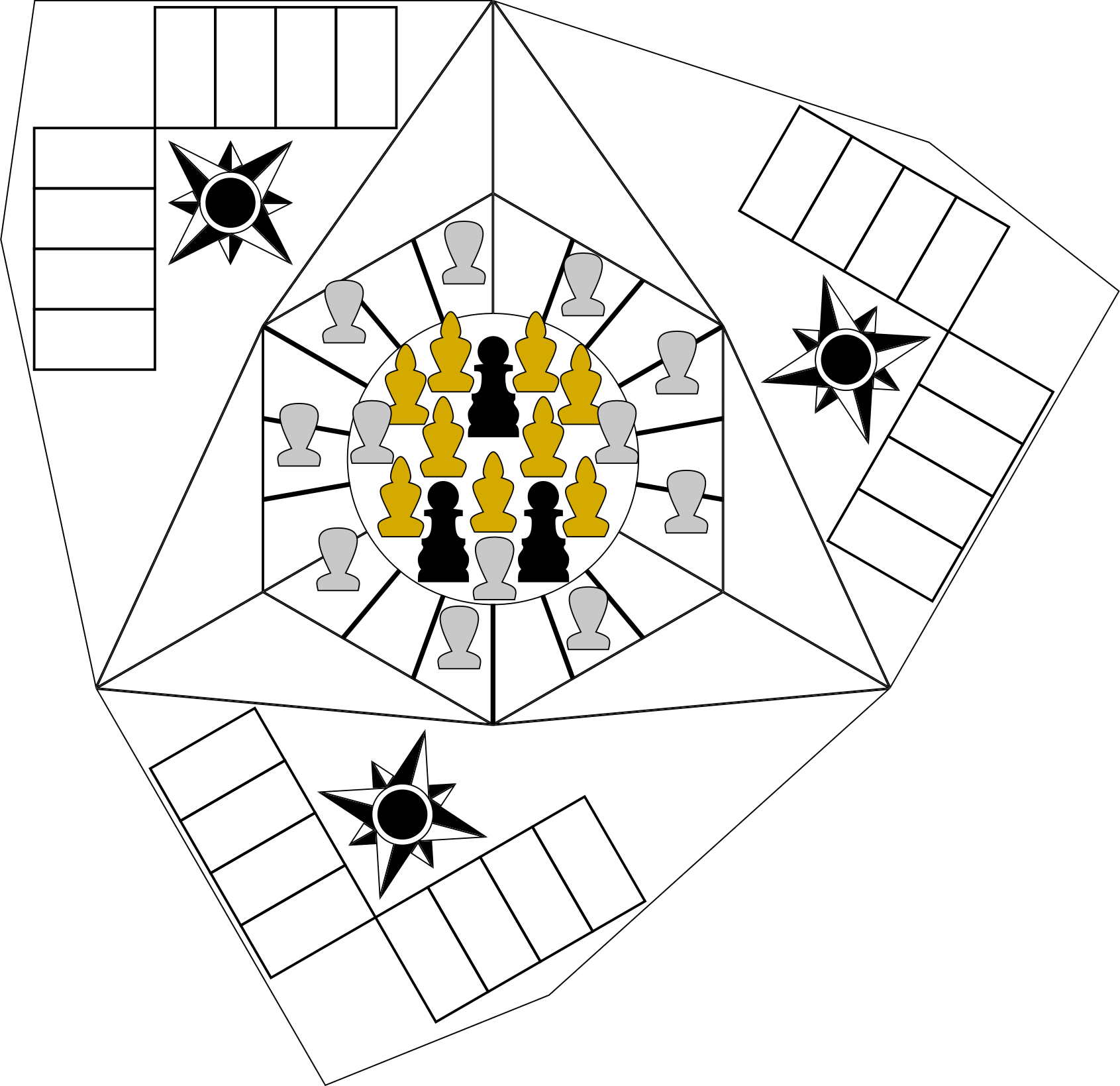
3-Player Setup
12 Marks, 9 Heels, 3 Pawns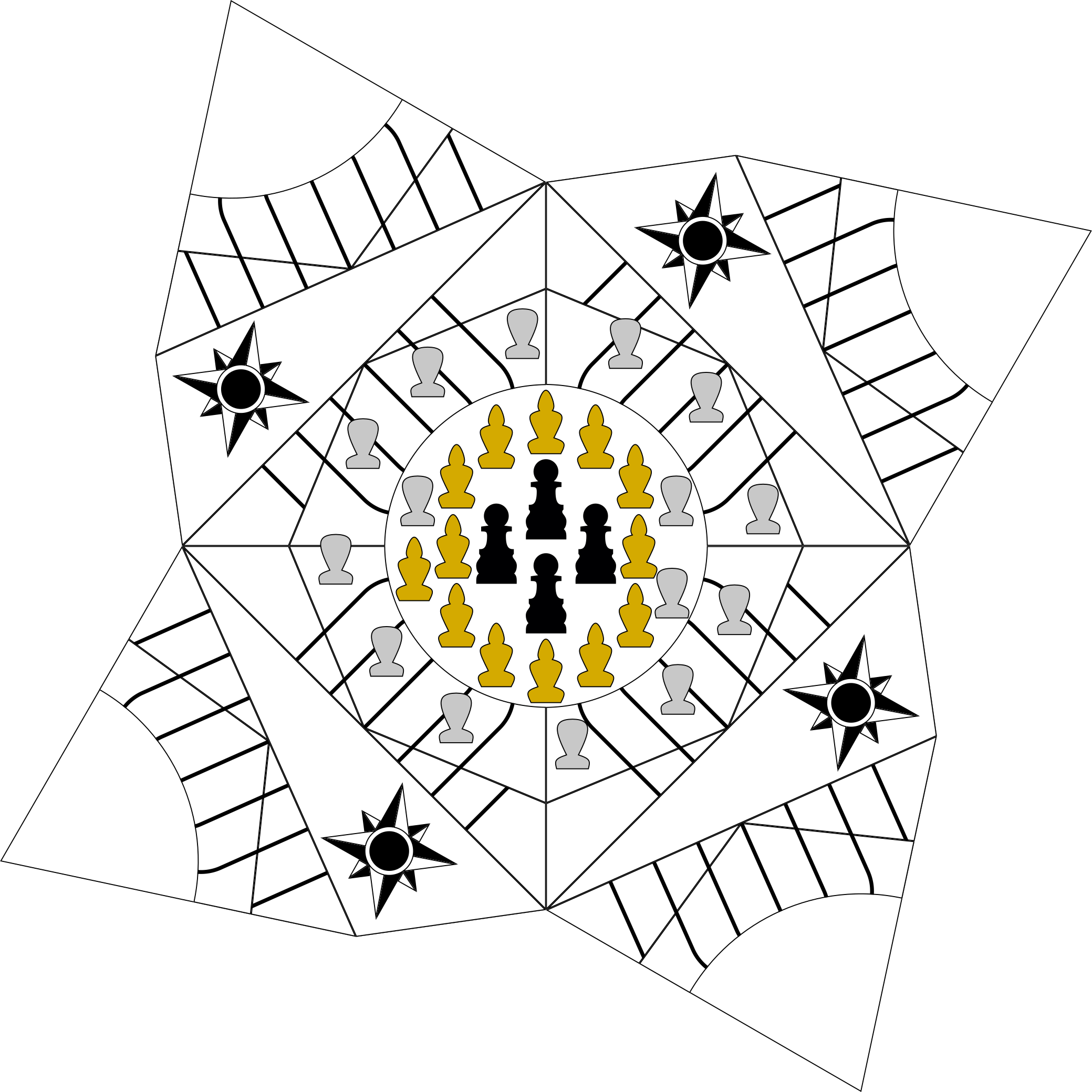
4-Player Setup
15 Marks, 13 Heels, 4 PawnsHow the Pieces Movearrow_upward

Advance - This action may be used to add one Mark from the Community to one of your vacant Seats. Only if there are no Marks left in the Community may this action be used to add a Heel from the Community to a vacant Seat.
Once all 3 Seats of a Faction are occupied, this action may instead be used to advance one of those 3 pieces to their corresponding Rostrum. If both Rostrums of a Domain are occupied, this action may also be used to advance a piece from a Rostrum to the Office.

Assist - This action may be used to add one Mark from the Community to one of your Opponent's vacant Seats. Again, if there are no Marks left in the Community this action may be used to add a Heel from the Community to an opponents' vacant Seat.

Withdraw - This action may be used to either A) withdraw a piece from one of your Seats back to the Community B) move a piece from one of your Rostrums down to a vacant Seat or C) move a piece from your Office down to one of your vacant Rostrums.

Remove - This action may be used to Remove one Mark from any of your Opponent's Seats to the Community. This action does not allow you to 'Withdraw' any of your opponent's pieces from Rostrums or Offices. This action does not allow you to Remove Pawns or Heels to the Community.
• If a piece occupies a Rostrum in any Faction where no Seats are occupied, that piece must immediately be moved down to a Seat of that player's choice in the corresponding faction. Likewise, if a piece occupies any player's Office while neither of their Rostrums are occupied, that piece must also be immediately moved down to a Rostrum of that player's choice.

Organize - This action may be used to move one of your pieces one space to the left or right. Movement between Rostrums is not possible. However, it is possible for a player to transfer their own piece to an adjacent player's Rostrum or Seat.

Influence - This action may be used to move one of your opponent's pieces one space to the left or right. Moving pieces between Domains, including into your own, is permissible. However, a Pawn may not be Influenced into or out of any Domain.
• When making two moves in a turn, they may be done in any order. However, they must affect separate pieces. For example, you cannot Influence another player's piece into your domain and then Advance or Withdraw the same piece. Nor can you give another player a piece and then Influence that same piece into your own domain.
The Campaignarrow_upward
The Play
At the beginning of each Campaign, the player with the “0” tile becomes the first "Mover". It is not required that they play the "0" tile on their first turn. The Mover moves any one or two pieces according to the “How the Pieces Move” section (see pg. 4).
Then, the Mover places one of their tiles face-down in front of any player they choose. This will be the "Receiver". It is not required that the pieces are moved in exact accordance to what is on the tile played. The Mover may make any Honest or Dishonest play, but they may not make an Illegal play (see pg. 2). Passing the tile indicates that the Mover is finished.
The Receipt
If a player has no remaining tiles, choose another player to be the receiver (yourself if you must).
If the Receiver has no remaining Credibility, skip to 'The Challenge'.
If the Receiver does have any remaining credibility, they may look at the tile. If the tile matches the move(s) made, the Receiver will place the tile face-down next to their Accept line. If the tile does not match the move(s) that were made, the Receiver has two choices:
- Place the tile face-down next to their Accept line, as if it were an Honest play, OR
- Turn the tile face-up to Expose the Dishonest play.
If the Receiver opts to expose a Dishonest play, the following occurs:
- The Receiver restores up to 2 notches on their Credibility Token or takes a free Advance action. The tile is then placed face-up in their Bank and is not counted towards their funding.
- The Mover returns the dishonestly moved pieces to their original positions and then makes the play exactly as per the tile played. The Mover then also incurs 1 notch on their Credibility Token.
The Challenge
After a tile has been accepted by the Receiver and laid face-down at their Accept line, players with credibility still remaining (in clockwise order from the receiver) have the opportunity to challenge the veracity of the play.
If all players accept the play, the Receiver simply deposits the tile face-down in their bank to be counted toward their funding. The Receiver then becomes the next Mover and continues play.
If any player challenges the play, the tile is turned over for all to see.
- If the play is then shown to have been honest, the following occurs:
- The Mover restores 1 notch on their Credibility Token. If they had no credibility at the start of that turn, they do not restore credibility.
- The Challenger incurs 1 notch on their Credibility Token.
- The Receiver deposits the tile in their Bank face-down to be counted toward funding but does not restore any credibility or gain anything other than the funding on the Tile.
-
If the play is shown to have been dishonest, the following occurs:
- The Mover returns the dishonestly moved pieces to their original positions, and then makes the play exactly as per the tile played. The Mover then also incurs 1 notch on their Credibility Token. If they had no credibility at the start of that turn, they must instead take a Withdraw action.
- The Challenger may either restore 1 notch on their Credibility Token OR use funding to perform one Bureaucracy action. (Tiles are turned face-up. Leftover funding is lost.)
- The Receiver incurs 1 notch on their Credibility Token (if possible), and discards the Tile face-up in their Bank . This tile will not count towards their funding.

The blank tile cannot be used to achieve a winning setup.
Credibilityarrow_upward
Each player has a “Credibility Token” to indicate their level of trustworthiness. At the beginning of the game, this should be placed so that the smooth edge is uppermost indicating full credibility.
(Starting Position)




- As the Mover, their play is refused by the Receiver or challenged by another player and shown to have been dishonest.
- As the Receiver, they accept a play and a subsequent challenge shows it to have been dishonest.
- As a Challenger, the play they are challenging is shown to have been honest.
- They may no longer restore notches on their Credibility Token until the Bureaucracy Phase.
- They may not challenge any opponent's play until they restore at least one notch (during the Bureaucracy Phase).
- They may not look at a tile they are given unless it is challenged by another player.
- If caught making a Dishonest play, they will be required to take one Withdraw action.
If any player incurs a third notch to their credibility, they must turn their Credibility Token on end to indicate that they have lost all credibility. This means:
A player may restore one notch on their Credibility Token for each of the following:
- As the Mover, their play is challenged and subsequently shown to have been honest.
- As the Receiver, they have exactly one notch on their credibility, expose a dishonest play and opt to restore the notch rather than take a free Advance action.
- As a Challenger, the play that they challenge is subsequently shown to have been dishonest.
A player may restore two notches on their Credibility Token only when, as the Receiver, they have exactly two notches on their Token, refuse a dishonest play and opt to restore both notches rather than take a free Advance action.
Bureaucracyarrow_upward
At the end of each Campaign, players add up the total of all the face-down tiles they have to determine their available funding and then announce that number. The player with the highest available funding goes first, with the remaining players going in descending order of available funding. In the event of a tie, any player with a Pawn goes first. If both players (or neither) have a Pawn, the player with the most Heels goes first; then the most Marks; and finally, the most Credibility.
Each player may use their available funding for any of the actions listed below that they can afford. The number of Marks or Heels a player may gain during their turn is limited only by their available funding and the number of available pieces. But each player may only ever have one Pawn.
The sum of all of the numbers announced combined with the sum of the face-up tiles should add up to exactly 100.
in the Office one time.
at a Rostrum one time.
in a Seat one time.
3-Player
4-Player
5-Player
After all players have completed Bureaucracy, players turn all their tiles face-down and take them out of their Bank. The player with the "0" tile begins the Campaign for the next round.
Winning the Gamearrow_upward
The game is won by the player who has a Pawn in the Office, a Heel in each Rostrum and either a Mark or a Heel in all 6 Seats. This can be achieved at two possible points in the game:
- During the Campaign phase, when any challenges to the winning play have been resolved.
- At the end of the Bureaucracy phase when all players have made their moves and used up their available funding.
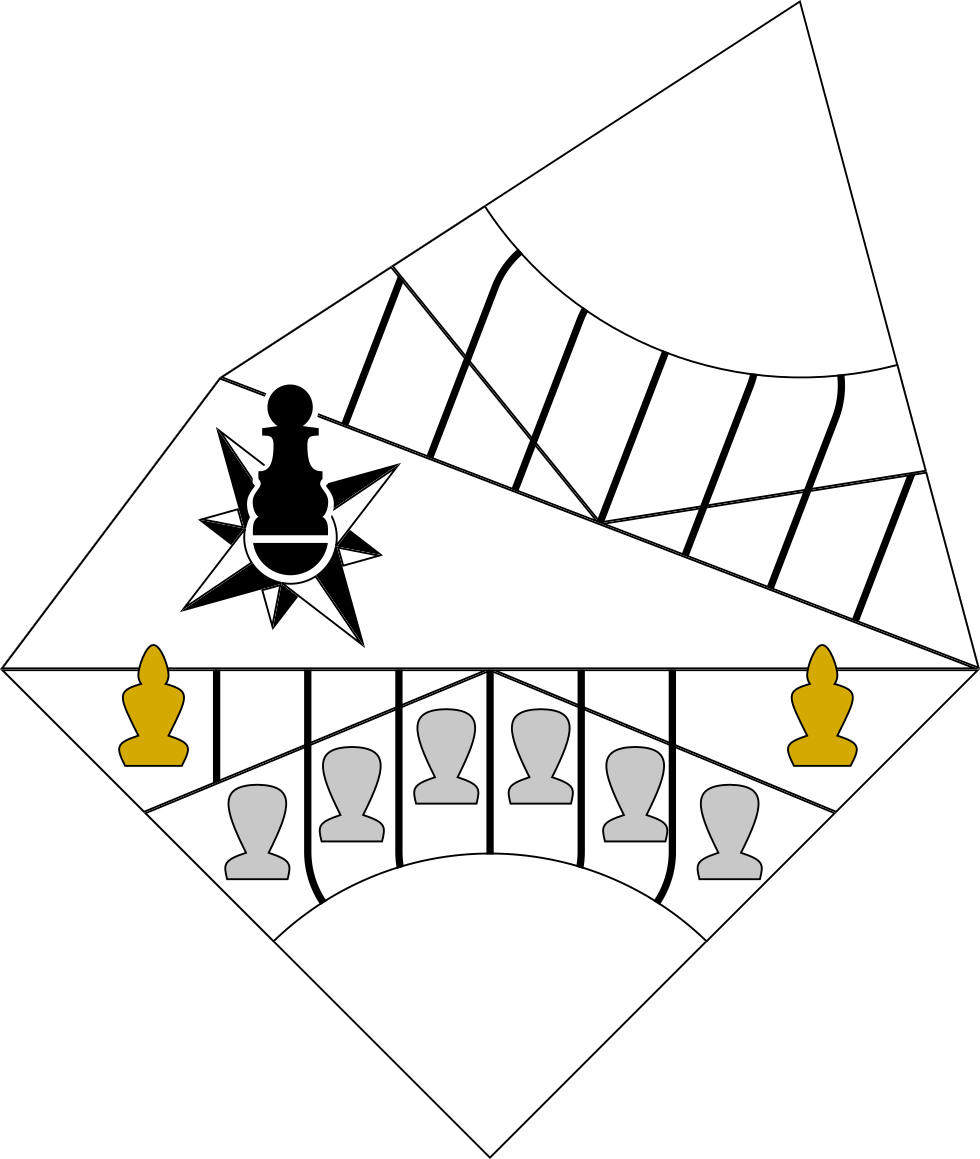
A winning Setup in a 4 Player Game
(Any of the Marks could be Heels instead.)
- If you don't have time for a full game, consider going for a partial setup: e.g. a Pawn in the Office and a Heel in each Rostrum with at least one supporting piece.
- For a cut-throat 3-player game, try the 4-player (or even 5-player) price list in Bureaucracy!
- Nothing better to do with an entire day than enjoy a KRED marathon? Try the 3-player Bureaucracy price list in a 4-player (or even 5-player) game!
And finally...Is that even possible, Sam?arrow_upward
Some things that may be worth remembering. Or not, as the case may be.
There are many different strategies and tactics in this game and, of course, bluffing comes in all shapes and sizes. Suffice to say, never take anything at face value. Just because your opponent looks like you couldn't throw them as far as you could trust them, they just might be as honest as the day is long. Credibility, or lack thereof, cuts both ways! And just because the tile you receive doesn't match the move the player made, you don't have to admit it straightaway. Think of the funding in Bureaucracy - did they bung you enough? But don't think for too long, or your opponents might expose you as the bribe-taking scallywag that you are. Unless, of course, the move was honest. Then you might delay as much as you like, and lure the unsuspecting Challenger into losing his credibility. As the saying goes - Don't believe half of what you see, and none of what you hear!
That said, you may still have a few queries as to the way the game is played. Here's a few pointers for potentially tricky situations.
-
Why isn't the receiver rewarded for accepting an honest move? After all, he's doing a good thing.
Because that is what he should be doing. Should you get a pat on the back every time you don't steal something from a shop?
-
I've just got a winning set-up half-way through Bureaucracy. Game over.
Not so fast Nick O'Teen, the game is only over if the winning set-up still exists when every player has finished their Bureaucracy.
-
It's the last tile of the Campaign. The Mover and Receiver are the same player. Is this ok?
Yes, but probably something that should be avoided. Keep an eye on who has tiles and who should be given tiles during the Campaign.
-
Someone made an illegal move. I know it's illegal because there's no tile with that crazy-arse play on it. But I don't have any credibility left, what can I do?!
You can call it out. Everybody, regardless of their credibility, position in the game, and/or in society as a whole, has the right to expose illegality.
Our lawyers have also advised us that in the following contentious situations players should probably agree house rules before beginning the game.
- What should we do with a player who makes an illegal move?
- The move was honest but the Receiver turned the tile face-up. Should we punish them?
- The move was dishonest and the Receiver, while having no credibility left, exposed it as such. They should probably not even have touched the tile! Can we flay them alive and feed their skin to the cat?
- A player has lost all their credibility and is required to take a Withdraw action. They don't want to, and neither do the other players. Can we just let them off?
Depending on your preference for the ultimate cut-throat experience, or a more lenient and understanding approach to the failings of your fellow human beings, the punishments, if any, for the above infringements we feel should be left to the discretion of the players themselves. We thank you for your understanding.
One more thing: Please remember, what happens on the pitch stays on the pitch. No hard feelings, and don't argue too much. Friendships are too precious to throw away over such trifles. Enjoy!
Customer comments:
- 'It's not that much fun to play.' - C. Coaster
- 'How to show your ugly side to people who used to like you.' - G. Knight-Fluid
- 'It's not a cosy night in by the fire, that's for sure.' - F. Chef
- 'Don't blame me, you all agreed it was a good idea at the time.' - S. Cout
Flowchart
* Players with no credibility or who must play a tile to theirself may keep funding even if the move is challenged and found dishonest.
Did the Receiver lay the tile face-up to reject the play?
for all to see.
Was the move dishonest?
- deposits the tile face-down and continues.
The Mover
- Returns dishonestly moved pieces.
- Makes a play exactly as per the tile.
- Incurs one notch on their Credibility Token.
- Restores up to 2 notches on their Credibility Token OR takes a free Advance action.
- Discards the tile face-up NOT to be counted toward funding.
The Mover
- Returns dishonestly moved pieces.
- Makes a play exactly as per the tile.
- Incurs one notch on their Credibility Token.
- Restores one notch on their Credibility Token OR buys one Bureaucracy action.
- Incurs one notch on their Credibility Token.
- Discards the tile face-up NOT to be counted toward funding.
The Mover
- Restores one notch on their Credibility Token.
- Incurs one notch on their Credibility Token.
- Deposits the tile face-down to be counted toward funding.